

Egypt is an unforgettable destination that should be on everyone’s bucket list. Whether you love exploring ancient sights, snorkelling in clear seas, or relaxing on sandy beaches, there’s something for everyone in this North African country.
Two weeks in Egypt allows you to explore some of the most spectacular sights, while factoring in enough time to chill – you are on holiday after all! This itinerary covers Cairo, Luxor, Aswan, and Red Sea resorts.
Best time of year to visit Egypt
Egypt is a year-round destination but for most first-time visitors, October to April is the best time to go. Daytime temperatures are warm but not unbearable so it is comfortable for walking around the sights.

If you’re planning to visit a Red Sea resort, you’ll get some fantastic winter sun during these times.
We went in November which I think was a fantastic time to go. The weather was still hot in the day times but not stifling, dropping a little cooler in the evenings and early mornings, and most of the sights weren’t too busy.
How to get around in Egypt
There are a few options for getting around during your trip to Egypt, including:
- Internal flights
- Car hire
- Train
- Nile cruise
- Private transfers or drivers

Internal flights
For longer distances, domestic flights are usually the most efficient way to travel in Egypt. Routes such as Cairo to Luxor, Aswan to Cairo, or Aswan to the Red Sea resorts take less than two hours and save an enormous amount of time compared to travelling by road or rail.
EgyptAir operates the majority of domestic flights and is generally reliable, with good safety standards and reasonable baggage allowances.
We flew from Hurghada to Cairo with Air Cairo and the flight took just over an hour and a half. The flights are reasonably priced and comfortable – you even get a snack and a bottle of water on board!

Travelling Egypt by train
Egypt’s train network runs along the Nile and connects Cairo, Luxor, and Aswan, making it a viable and sustainable alternative to flying. For first-time visitors, overnight sleeper trains or first-class daytime trains are the most comfortable options.
The overnight sleeper train between Cairo and Luxor or Aswan is popular, saving a night in a hotel and arriving early the next morning. While not luxurious by international standards, it is generally safe, air-conditioned, and well-suited to travellers who enjoy slower journeys.
Daytime first-class trains are another option, particularly for shorter legs, offering assigned seating and a relaxed pace with views of rural Egypt through the window.

Taking a Nile Cruise in Egypt
If you’re a slow traveller, you can opt to do a Nile cruise one way from Luxor to Aswan (four days) or both ways which takes seven days. It’s an easy way to get around the sights without having the hassle of planning everything independently so it’s perfect for first-time visitors to Egypt.
As well as accommodation in comfortable cabins, Nile cruises usually include meals, excursions, and transport between the sights. It’s also a bit of nostalgia and romance – we’ve all seen Agatha Christie!
Private transfers or drivers
For shorter distances or specific excursions, private drivers and guided transport are widely used in Egypt. Many travellers choose private transfers for airport pickups, hotel-to-cruise connections, or day trips to sites like Abu Simbel.
Hiring a car
Unless you’re a really confident driver who’s used to driving in different countries, then I wouldn’t recommend hiring a car in Egypt. The driving here is really chaotic, with several lanes of traffic, fast speeds, and drivers weaving in and out at will.
Navigating can also be difficult with inconsistent road signage. Other modes of transport are far less stressful!

Two-week Egypt itinerary
I recently visited Egypt and, based on my experiences, I’ve put together the perfect two-week itinerary including where to stay and what to do while you’re there. My itinerary was slightly different to this as I did a Nile cruise and stay in Hurghada, which is a fantastic option if you fancy slow travelling and having a base, rather than moving around.
Summary – two week itinerary for Egypt
- Day 1-3: Cairo and Giza
- Day 4-6: Luxor
- Day 7: Edfu
- Day 8: Kom Ombo
- Day 9-11: Aswan
- Day 12-14: Red Sea resort
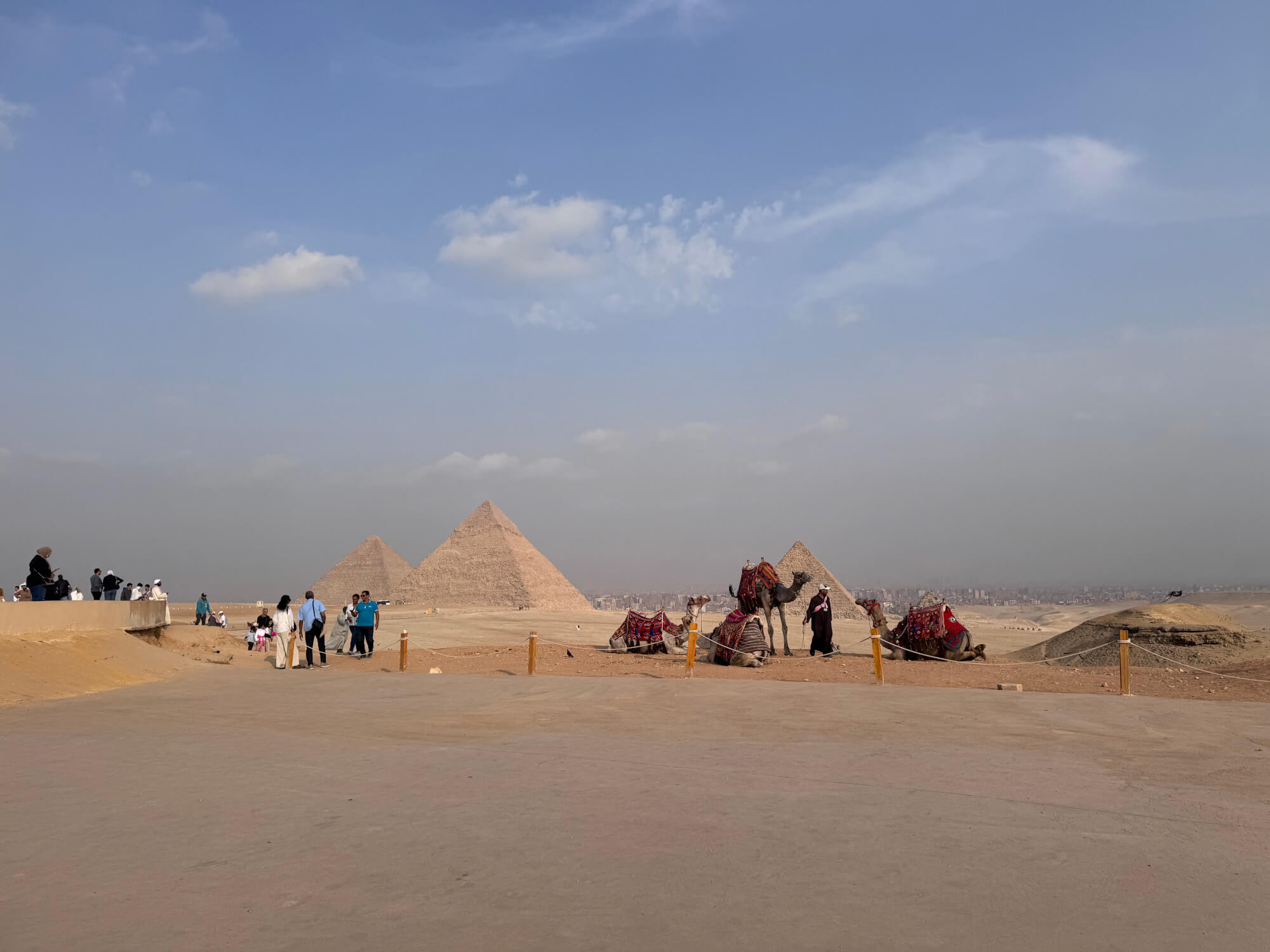
Day 1-3: Cairo and Giza
I only took a day trip to Cairo during my trip to Egypt but I would recommend spending at least two full days there as there is so much to see. Cairo might be a bit of a culture shock if it’s your first time in Egypt as it is so busy and chaotic, so you might need a little time to bed in.
There is a lot to see in Cairo and nearby Giza including many museums, the pyramids (of course!), and just soaking up the local culture, so you may want to spend more than a couple of days here if you have time during your trip.
Things to do in Cairo and Giza
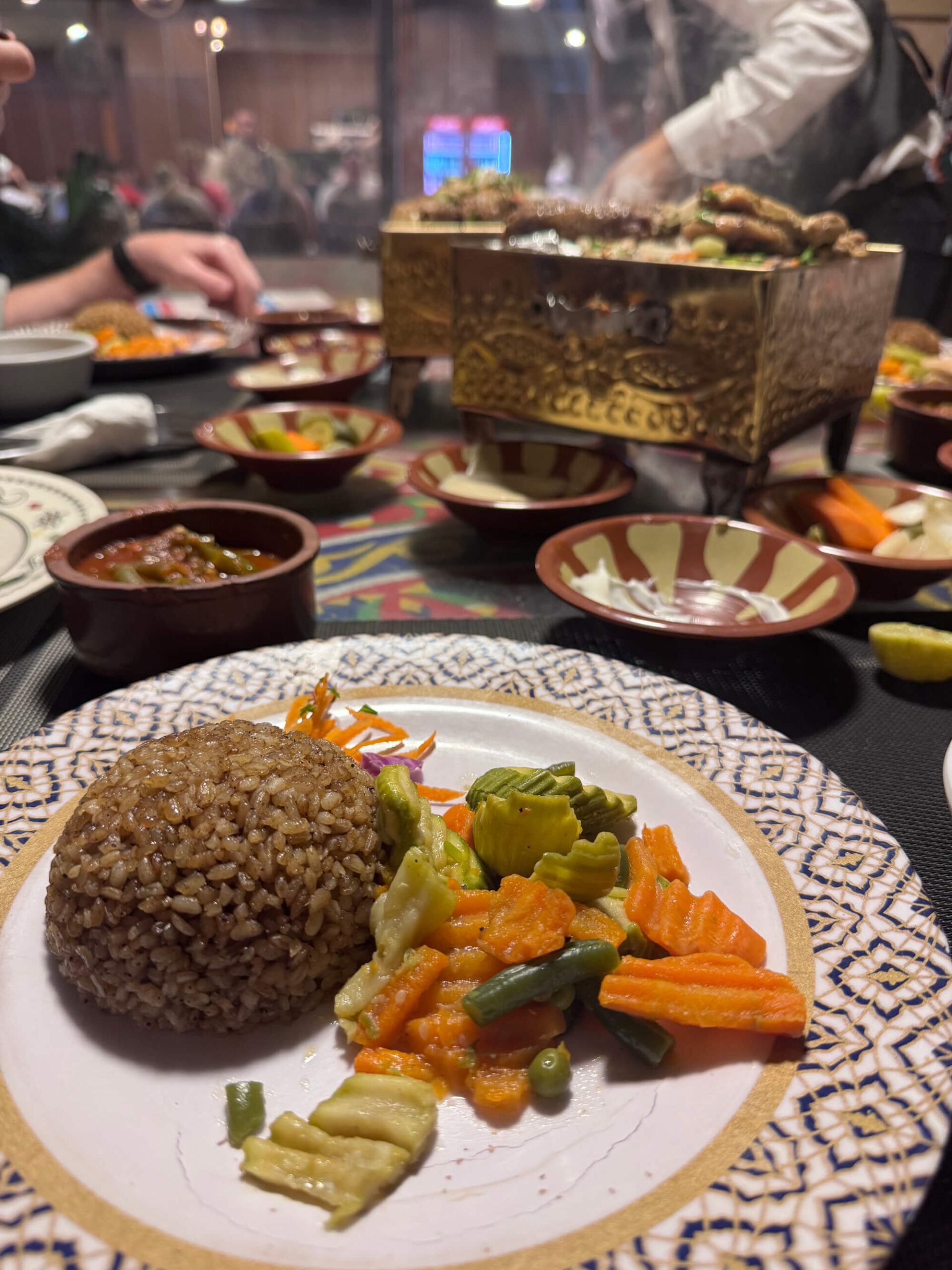
Day 1: Dinner at a local restaurant
If you’ve flown into Cairo then chances are that your first day will be mainly taken up with travelling and checking into your hotel. Be sure to enjoy dinner at a local restaurant – the food here is superb!
My favourite thing was the homemade flatbreads and dips that were widely available everywhere.
Day 2: Egyptian Museum of Antiquities and the pyramids
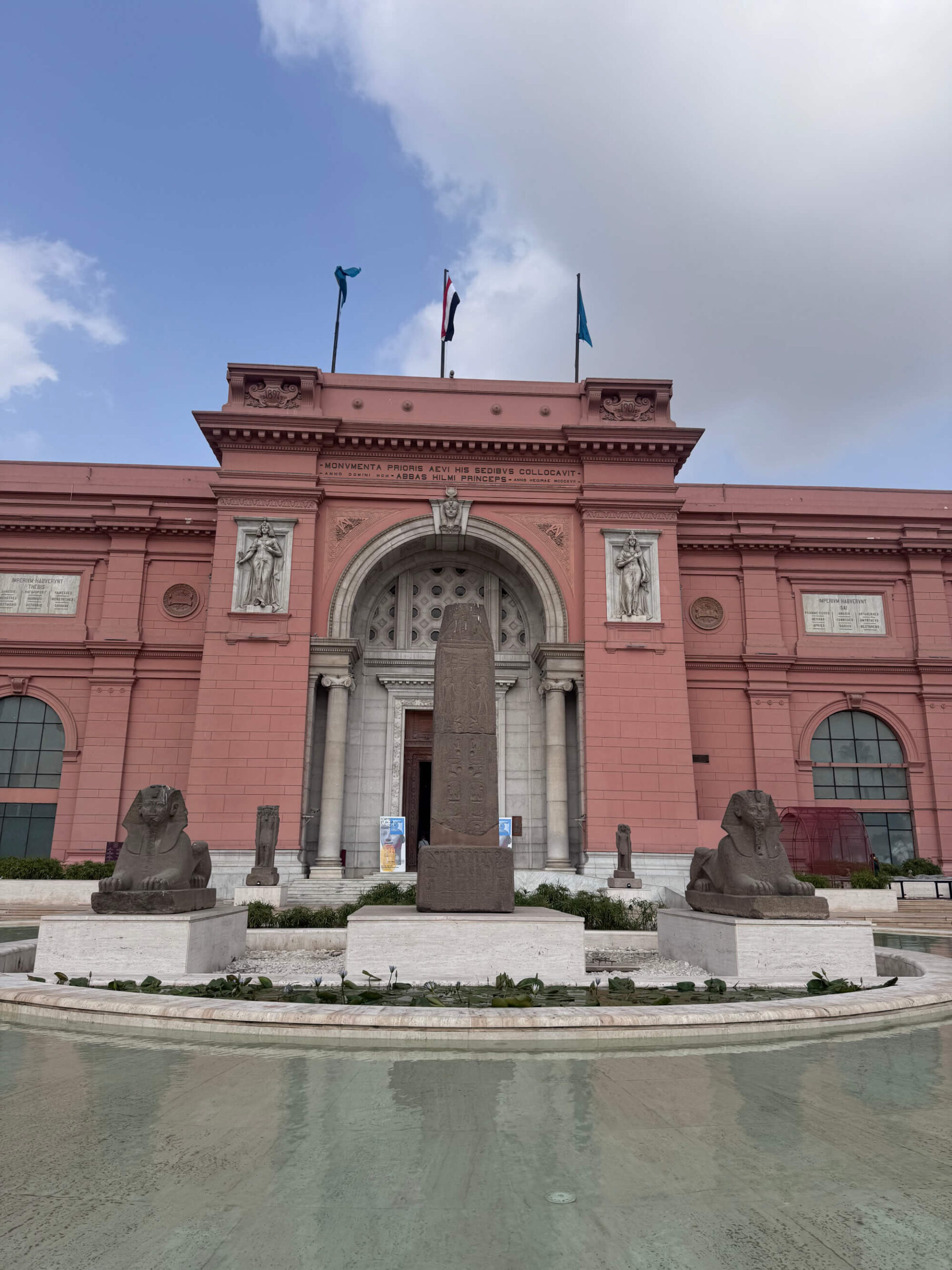
The Egyptian Museum of Antiquities, commonly known as the Egyptian Museum, is home to a wide array of Egyptian artefacts and treasures. A lot of its collection has recently been moved to the new Grand Egyptian Museum, but there’s still plenty to see, including statues, mummies, and everyday items, so you can easily spend a couple of hours looking around.
Next up, a visit to the pyramids and the Sphinx in Giza – the highlight of any trip to Cairo. The pyramids are simply breathtaking and you can spend a while wandering around them and taking pictures.
The Sphinx was also incredible – I had no idea how big it was!
You can also pay extra to go inside one of the pyramids if you like. We went inside one of the smaller ones, but there wasn’t really anything to see.

On some evenings there is also a light and sound show.
Top tip: Visit the pyramids in the late afternoon. It is usually quieter during this time and you’ll get to see the sun set behind them which is a truly magical experience.
Day 3: Grand Egyptian Museum
The Grand Egyptian Museum is a new museum in Cairo that opened in 2026 and is the largest Ancient Egyptian museum in the world. We didn’t go here during our trip to Cairo as we didn’t have time during the day but our guide suggested that you would need a full day to see everything here.
Other places to visit in Cairo:
- Khan el-Khalili bazaar
- Saqqara
Where to stay in Cairo and Giza
Budget: Pyramids Temple Guest House is like a home away from home in Giza. It costs around £25 per night and has a view over the pyramids from its roof terrace.
Mid-range: Safir Hotel Cairo is close to the Egyptian Museum in downtown Cairo and makes a great base for sightseeing.
Luxury: Four Seasons Cairo has impressive views of the Cairo skyline and the Nile, plus a swimming pool and spa.

Day 4-6: Luxor
Luxor is one of the most important places to visit in Egypt, with a huge concentration of temples and tombs along the Nile. It’s where many travellers get their clearest sense of just how advanced and ambitious ancient Egypt really was.
Day 4: Luxor Temple
Luxor Temple sits right in the centre of modern Luxor and is easy to visit, even if you’re short on time. I love that it’s just in the middle of the city, surrounded by more modern buildings. It reminded me of Rome.

It’s especially impressive in the evening, when the lighting makes the columns and statues feel more dramatic without being overwhelming.
Day 5: Hot air balloon ride and Valley of the Kings
Start your morning with a sunrise hot air balloon ride over the Valley of the Kings – this really looks epic! We had booked to do this but our trip got cancelled because of high winds so we were disappointed.
Now that you’ve seen it from the air, it’s time to explore the Valley of the Kings from the ground. The Valley of the Kings is where many of Egypt’s pharaohs were buried, including Tutankhamun.

Visitors walk through a series of richly decorated tombs, giving a direct look at ancient burial rituals and beliefs about the afterlife.
You pay an admission fee and then an additional fee if you want to visit some of the most popular tombs. We paid extra to go into Tutankhamun’s tomb – but I accidentally walked straight past his mummy!
This was the busiest place we visited in Egypt and it was a little overwhelming inside the tombs when they were crammed with people – especially as it got hotter during the day.
Day 6: Karnak Temple

Karnak Temple is the largest religious complex in ancient Egypt and can feel vast on a first visit. The scale of the columns and courtyards helps put into perspective just how powerful and long-lasting the civilisation was.
Karnak Temple covers a huge amount of ground, so you can easily spend a few hours here.
If you’ve decided to take a Nile cruise, then you’ll most likely get on this at Luxor.
Where to stay in Luxor
Budget: Happy Land Luxor
Mid-range: Pavilion Winter Luxor
Luxury: Sofitel Winter Palace Luxor

Day 7: Edfu
Edfu is usually visited as part of a Nile cruise and centres almost entirely around one site, making it a focused and unhurried day.
Start in the morning at the Temple of Horus, one of the best-preserved temples in Egypt. Walking through the pylons, courtyards, and inner chambers gives a clear sense of how ancient religious ceremonies were carried out.
If you’re taking a Nile cruise, the cruise usually leaves Edfu in the afternoon, continuing to Kom Ombo.

If you’re staying in Edfu for the night, after visiting the temple, take time to walk through the local market streets near the river and railway station. These areas are lively without being overwhelming, and you’ll see small shops selling produce, spices, and household goods rather than souvenirs aimed at tourists.
A walk along the Nile corniche is another easy way to fill part of the day. The riverfront is calm compared to larger cities, and watching feluccas and small fishing boats pass by gives a sense of how closely daily life here is tied to the Nile.
For lunch, choose a local restaurant or café rather than returning to a hotel. Meals are simple and filling, and it’s a good opportunity to try traditional Egyptian dishes in a setting that feels more local than tour-focused.
Day 8: Kom Ombo

The main site to visit here is the Temple of Kom Ombo, uniquely dedicated to two gods, Sobek the crocodile god and Horus the Elder. The temple’s symmetrical layout is easy to explore, with parallel halls and chambers that make the visit feel less overwhelming than some of Egypt’s larger complexes.
Its riverside setting also makes it one of the more scenic temple stops along the Nile. We visited at night time which made the experience really magical – I actually had a tear in my eye!
After visiting the temple, you can pop into the next door Crocodile Museum, which displays mummified crocodiles found in the area and adds useful context to Sobek’s importance in this region.
Days 9-11: Aswan

Day 9: Aswan Dam, Philae Temple, and the night markets
Start the day with a visit to the Aswan High Dam, a modern landmark that reshaped Egypt’s economy and water management. Nearby, stop at the Friendship Monument, built to commemorate Egyptian-Soviet cooperation, for views across Lake Nasser and the surrounding desert.
From here, continue to Philae Temple, dedicated to the goddess Isis. Reached by boat, the temple complex sits on an island and is one of Aswan’s highlights. The setting is spectacular, the incredible temple reaching out of the bright blue water.
In the evening, take a walk through the Aswan night market. The main street fills with stalls selling spices, scarves, souvenirs, and snacks, creating a lively but approachable atmosphere that’s easy to explore after dinner.

Day 10: Elephantine Island
Spend the morning visiting Elephantine Island, one of the best places in Aswan to see everyday Nubian life. You can explore the island on foot, visit the small archaeological areas, and enjoy views back toward the city and the river.
Later in the day, take a short felucca ride around the local islands. Sailing on the Nile here is unhurried and scenic, offering a welcome break from structured sightseeing.
In the afternoon, visit an essential oils and perfumes shop, a common stop in Aswan. These visits usually include an explanation of how the oils are produced and used, with time to sample different scents.
Even if you don’t plan to buy, it’s an interesting look at a traditional local industry.
Day 11: Nubian history and culture
Take your final day in Aswan at a slower pace. Start with a relaxed breakfast overlooking the Nile, then revisit a favourite area or explore parts of the city you might have missed.
If you’re interested in museums, the Nubian Museum is a worthwhile option, providing context on Nubian culture, history, and the impact of the dam on the region. Alternatively, spend more time wandering along the riverfront, watching boats move between the islands.
Where to stay in Aswan
Budget: Go Inn Backpackers
Mid-range: Sonesta Nouba Hotel Aswan
Luxury: Sofitel Legend Old Cataract

Days 12-14: Red Sea resort
After all that exploring, you’ve earned yourself some downtime and there’s nowhere better to relax than one of Egypt’s Red Sea riviera resorts. Spend your days chilling out at the beach, snorkelling, or taking some more trips.
Horse riding, quad biking, and boat trips to nearby islands are all on offer.
The main places to stay include:
- Hurghada – A classic Red Sea destination with long sandy beaches, a wide range of hotels and snorkelling/diving trips on offer, plus easy flight connections. It’s lively and well-established for all kinds of travellers.
- El Gouna – A planned resort town north of Hurghada built around lagoons and waterways, with beaches, watersports, golf, restaurants and a relaxed but polished vibe.
- Sahl Hasheesh – A quieter, upscale bay just south of Hurghada known for its clear water, luxury resorts and coral reefs close to shore.
- Makadi Bay – A family-friendly resort area with calm waters, beaches and plenty of all-inclusive options; good for snorkelling and water activities without the hustle of larger towns.
- Soma Bay – A self-contained beachfront community with strong winds and water sports, a golf course, scuba diving and spa options, ideal for active or wellness-oriented stays.
- Sharm el-Sheikh – On the Sinai Peninsula, this well-known resort town has dramatic coral reefs, day trips to Ras Mohammed National Park and Tiran Island, plus plenty of nightlife and dining options.
- Marsa Alam – A more relaxed, scenic destination further south with pristine beaches and excellent diving/snorkelling at spots like Abu Dabab and Elphinstone Reef, ideal for nature lovers and divers.

We stayed at the AMC Royal Hotel & Spa on the outskirts of Hurghada. The hotel was great for a budget stay with a good selection of food at the all-inclusive buffet and a nice pool and beach area.
The area wasn’t that brilliant as it was quite far from the centre of Hurghada and you would need to take an Uber to get there, rather than walk. However, the sea here was so clear that we spotted so many different kinds of fish, even without our snorkels.
Things to be aware of when visiting Egypt
Egypt is welcoming and rewarding to travel through, but it helps to arrive with a few practical expectations. Knowing what to expect when you get there makes the experience far smoother and more enjoyable.

Summary – things to be aware of when visiting Egypt
- Tipping
- Currency
- Hassle
- Guided tours and organised transport
- Dressing appropriately
- Heat and crowds
Tipping is part of every day life
Tipping is the norm in Egypt and every man and his dog will expect to be tipped, from your taxi driver to toilet attendants. Be sure to get small notes when you exchange your currency so that it’s quick and easy to do.

We found a 200 Egyptian dollar tip (around £3) was sufficient for most things between five of us.
Currency and payments
The local currency is the Egyptian pound but most places and people will accept dollars, euros, and British pounds. Cash is widely used everywhere with card machines only available in certain places.
ATMs are available in cities but we were advised to only visit with a guide, in case of theft.

Expect hassle
You will find that most places you go in Egypt you will be approached by people trying to sell you something. It might be a souvenir, offers to guide you around, or someone offering to take photos.
A polite but firm no thank you will work, but be prepared to say it multiple times. Also, don’t take any offers of “gifts” as these will be expected to be paid – unless you want to buy them of course!
Haggling is also normal in markets and souvenir shops – even though things are often a lot cheaper than you would expect to pay in the UK, the prices normally start sky high. Have a price in mind and stick to your guns – be prepared to walk away.

Take guided tours for less stress
If you’re not a very confident traveller, or it’s your first time in Egypt, then guided tours can help to reduce the stress of organising everything yourself. We decided to book the tour package for the Nile cruise, as well as a guided tour of Cairo.
Guides help manage logistics, explain what you’re seeing, and limit unwanted attention at busy sites.
Dress and cultural awareness

Egypt is relatively relaxed, but modest dress is appreciated, especially at religious sites and in smaller towns. Lightweight clothing that covers shoulders and knees is usually the most comfortable and practical option, particularly when sightseeing in the heat.
I tended to keep my shoulders and knees covered wherever we went, although I did see some people in more revealing clothing. If you’re not sure what to bring, my Egypt packing guide will help.
Heat and crowds
Egypt’s most famous sights are outdoors and can get crowded and hot. Early morning visits are often cooler and quieter, especially in Luxor and Aswan. Planning downtime in the afternoon helps avoid burnout, particularly on a packed itinerary.

When we visited the Valley of the Kings, it was starting to get really hot and crowded which made some of the tombs a bit stuffy and claustrophobic.
Two weeks in Egypt gives first-time visitors a perfect mix of history, culture, and relaxation. From the awe-inspiring pyramids of Cairo to the temples along the Nile and the serene beaches of the Red Sea, this itinerary balances sightseeing with downtime, ensuring you experience Egypt without feeling rushed.
With a little planning around transport, weather, and local customs, your journey will be smooth, memorable, and full of moments that make the country’s ancient wonders feel truly alive.