
Today’s transportation world is changing as much as it has in more than 75 years since the first commercial flight. As a society, we have begun to live in the “tourist” and entered the “sovereign explorer” era, an era in which geographical borders and the old notions of residency and disparate regional telecommunication systems will be ripped away, one after another.
| Sponsored post |
The main worry of the modern traveller travelling with a high value isn’t a language barrier anymore, it’s that the digital infrastructure fails.
Today, in this climate, the expensive roaming or the old-fashioned way of finding a local plastic SIM card has been superseded by eSIM Plus. Through virtualisation of the cellular ID, the travellers can now experience zero-touch connectivity where their digital identity flows like their travel itinerary.
It is what digital sovereignty will look like in the future, and why the ability to take off and land in a new jurisdiction without needing to deal with the airport door or waiting for it to open is the new baseline.

The rise of “coolcations” and the geographic pivot
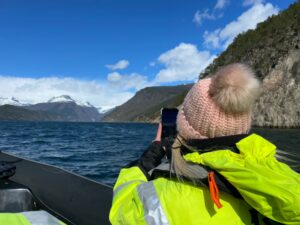
With its sustainability-focused agenda and desire to break free from the “sterilised” experience of the over-touristed hot spots, a clear trend in destination choice has become apparent for 2026. “Coolcations” – focusing on the cooler part of the world, such as countries in the Northern Hemisphere, including the Nordic nations and Iceland, as well as the Canadian Rockies, is no longer a small niche.
Yet with the geographical shift comes some logistical hurdles. Far more remote sites, such as Finnish Lapland or the high hills of Kyrgyzstan, provide the raw authenticity that 2026 travellers are seeking, but do require a greater self-sufficiency in tech skills.
There is no infrastructure in these “off-the-beaten-path” areas to keep the visitor’s hand. The key to success in these environments is a “Digital First” approach designed around a strong, independent data connection as opposed to a weak, unreliable, and unsafe Wi-Fi network within a remote guesthouse.
The architecture of the 11-month itinerary
The “long-stay immersion” concept is taking the place of the vacation. Today, travelling time is calculated in weeks and months (3 to 6 months) and frequently digital nomads and “slow travellers” take advantage of moving from one continent to the other, transforming the path of their travel that now coincides with the temperate seasons and key cultural events, including the FIFA World Cup and regional art Biennials.

It is a “Rail Renaissance” and a long-stay model that would need a specific technical stack. The modern traveller living life on the move relies on three main levels of infrastructure:
- Single provider resilience. Using one provider for connectivity is a single point of failure. The sophisticated traveller simply reloads the protocol they wish to use and changes the connection to the network of their choice based on signal strength and speed, thus getting past the monopolising regions.
- Secure privacy. It’s the ultimate luxury when it comes to privacy. Internet connectivity in transit hubs is one of the major conduits to data breaches. It is now essential for those who process or deal with corporate or financial information to set up a private, encrypted cellular tunnel.
- A local virtual persona. When interacting with local services, ranging from as simple as needing to ride a taxi around the Georgian capital of Tbilisi to requiring specialised delivery services in the Seoul region, a local digital persona may be necessary. It is done by means of virtual numbers, which can be used for two-factor authentication (2FA) and reception of local SMS without a physical presence.
A radical economic conversion is underway towards impact travel to maximize the benefits of tourism capital for local residents as opposed to international resort corporations. These “Not Hot” spots (e.g., visiting Tiwai Island, Sierra Leone, and Sierra Norte, Mexico’s highlands) require travellers to become their own tour guides.
Outside the “all-inclusive” paradigm, you come into a new world that is almost an ecosystem where information is the currency. Access to real-time data may not only make it easier to locate a family-owned farmhouse in rural Spain or an adventure with a community-led tour through the Tien Shan mountains, but it is also about joining a more balanced allocation of profits.

Through invisible digital connectivity, travellers are able to find out about and support local businesses without the advertising budget of the huge international tourism giants.
Creating a “frictionless” itinerary for 2026
A proficient day trip is not a rundown of the next few times and locations but instead an approach to power and concentration. To remove low-value decisions from the traveller’s mind will enable them to concentrate on the high-value experience.
| Phase | Common friction point | The strategic solution |
| Arrival | Airport Wi-Fi login loops & predatory roaming | Pre-activated, regional data profiles |
| Discovery | Over-touristed “Top 10” lists | AI-curated local insights based on real-time crowd data |
| Integration | 2FA issues with foreign banking/Apps | Virtual local numbers for seamless authentication |
| Wellness | “Always-on” burnout | Purposeful “Hushpitality” stays with integrated tech-restraint |
It is often argued that constant connectivity is damaging to the “spirit of adventure”. The evidence, however, is in conflict with this notion.
By connecting, the 9-day survival anxiety people suffered when travelling abroad was eliminated. The thing is, if you know you can interpret a medicine label, make an emergency call, and now operate in your native language, or head back to your hotel from a far-out trail, you are much more likely to take chances and come up with something great.
At the end of the 2020s, there are no tries in the way of true adventure – it is to be lost with confidence. The difference between getting stuck and goals being marketed for you.
Travel is becoming more and more personal and decentralised. The industry faces a diminishing customer base of mass tourism and an increasing market segment of people doing what we call “Intentional travel” – every trip is viewed as an investment in themselves and their growth or their professional development.
Such a new concept is about travelling in a way that minimises your physical impact and maximises your digital one.
You’re not just purchasing a service – you’re investing in the tools necessary to connect with the world, including advanced connectivity solutions from eSIM Plus, high-quality mobile hardware, and secure digital identities. There are more and more people who have the infrastructure to navigate the complexities of the world, but people who do not don’t exist in the same volume.
Travel is no longer only about the destination. How you live upon arrival is just as important.