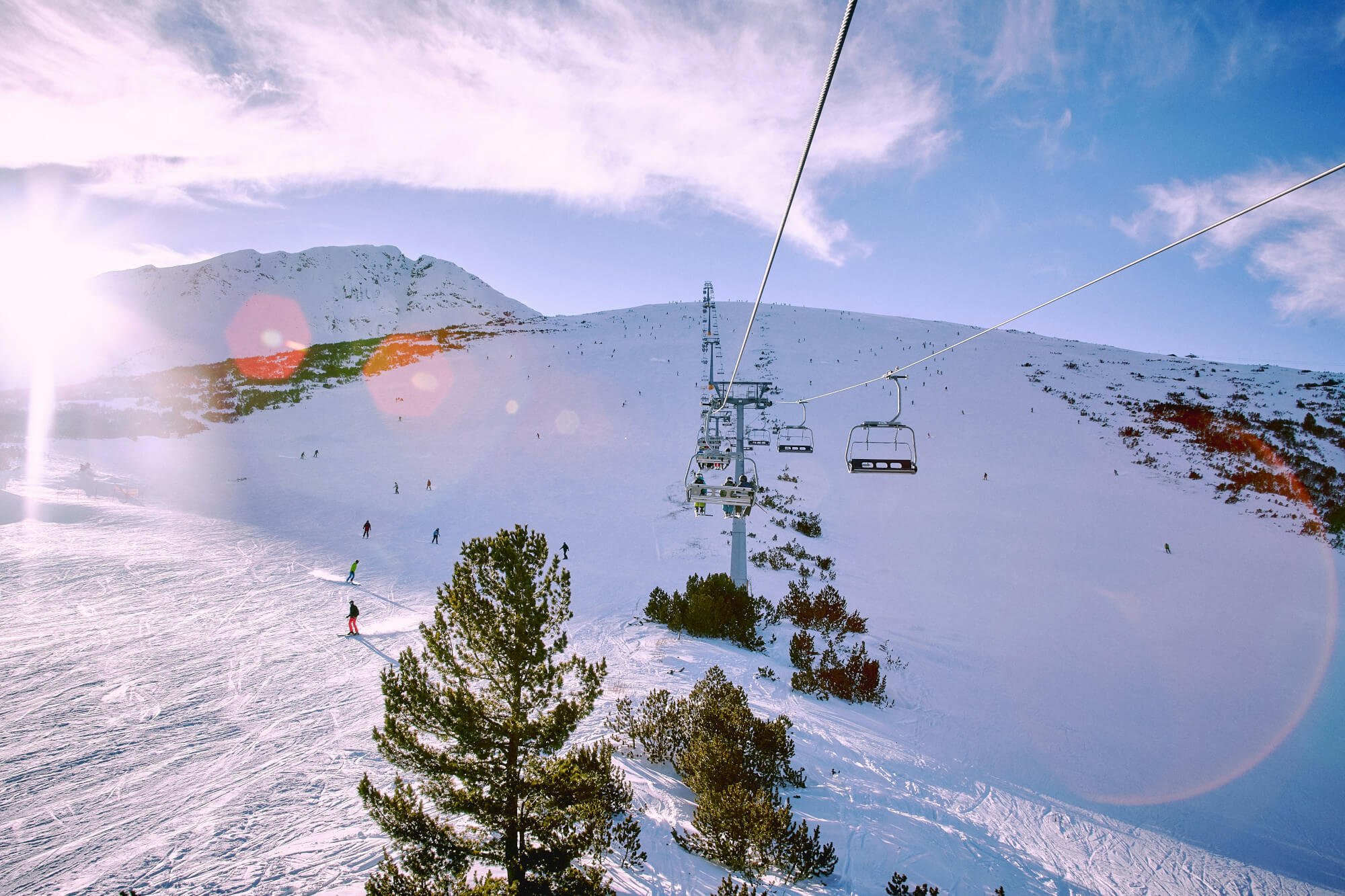
Bansko sits around 100 miles (160 kilometres) south of Sofia Airport, tucked under the Pirin mountains at the far end of the Razlog valley, and getting there is easier than its slightly remote spot on the map suggests. The road runs south down the Struma motorway, past Blagoevgrad, then climbs over the low Predela pass before dropping into the valley.
| Sponsored post |
On a clear day it takes a little over two hours.
That’s the good news. The less good news is that public transport only covers part of the way, so the choice you make at the airport shapes the first half of your holiday.
By private transfer
The simplest option, and the one most skiers with luggage end up choosing, is a car straight from the terminal. A pre-booked Sofia to Bansko transfer takes roughly two hours to two hours 30 minutes, the price is set when you reserve, and the driver meets you in arrivals at Terminal 2 with a name sign.
Ski bags, snowboards, and child seats can all be added at booking. Split between four or five people, it often works out only slightly dearer per head than piecing together the bus route, and it delivers you to the hotel door rather than a bus stand.
It also takes the stress out of a late arrival. Many flights from the UK land in the evening, when the last buses have already gone.
By bus
Buses to Bansko leave from Sofia’s Central Bus Station, not the airport, so the first step is getting into town. The M4 metro line runs from Terminal 2 to Central Station in about 25 minutes, and the bus station sits right next door.
From there, several daily departures make the trip to Bansko in around three hours, with fares usually somewhere between €10 and €15 (Bulgaria adopted the euro in January 2026, though you’ll still see older prices quoted in leva online).
It’s cheap and reliable. But hauling skis on and off the metro at rush hour is a workout, and the last bus often leaves in the late afternoon, so check the timetable against your landing time before you commit.
By the narrow-gauge train
For travellers with time and a taste for slow journeys, there’s the Rhodope narrow-gauge railway, which winds from Septemvri through the mountains to Dobrinishte, stopping at Bansko on the way. The views of the Rila and Rhodope ranges are wonderful, the carriages are old and charmingly rattly, and the full trip takes most of a day.
As a way of getting from the airport to your ski week, it makes very little sense. As a day out in summer, it’s one of the loveliest rail rides in the Balkans.
Driving yourself
Car hire desks at Sofia Airport are plentiful and usually cheaper than in Western Europe. You’ll need a vinetka (electronic road vignette) for Bulgarian motorways, which can be bought online or at petrol stations, and winter tyres are required in snowy conditions.
The road over the Predela pass is well maintained, though it can get slippery after heavy snowfall, and it’s worth fitting chains if the forecast looks bad.
Parking in Bansko itself is the real headache. Spaces near the gondola fill early, and many hotels in the old town have only a handful.
If your hotel can’t promise a space, a car may spend most of the week parked anyway, since the town is compact enough to walk everywhere.
Arriving in Bansko
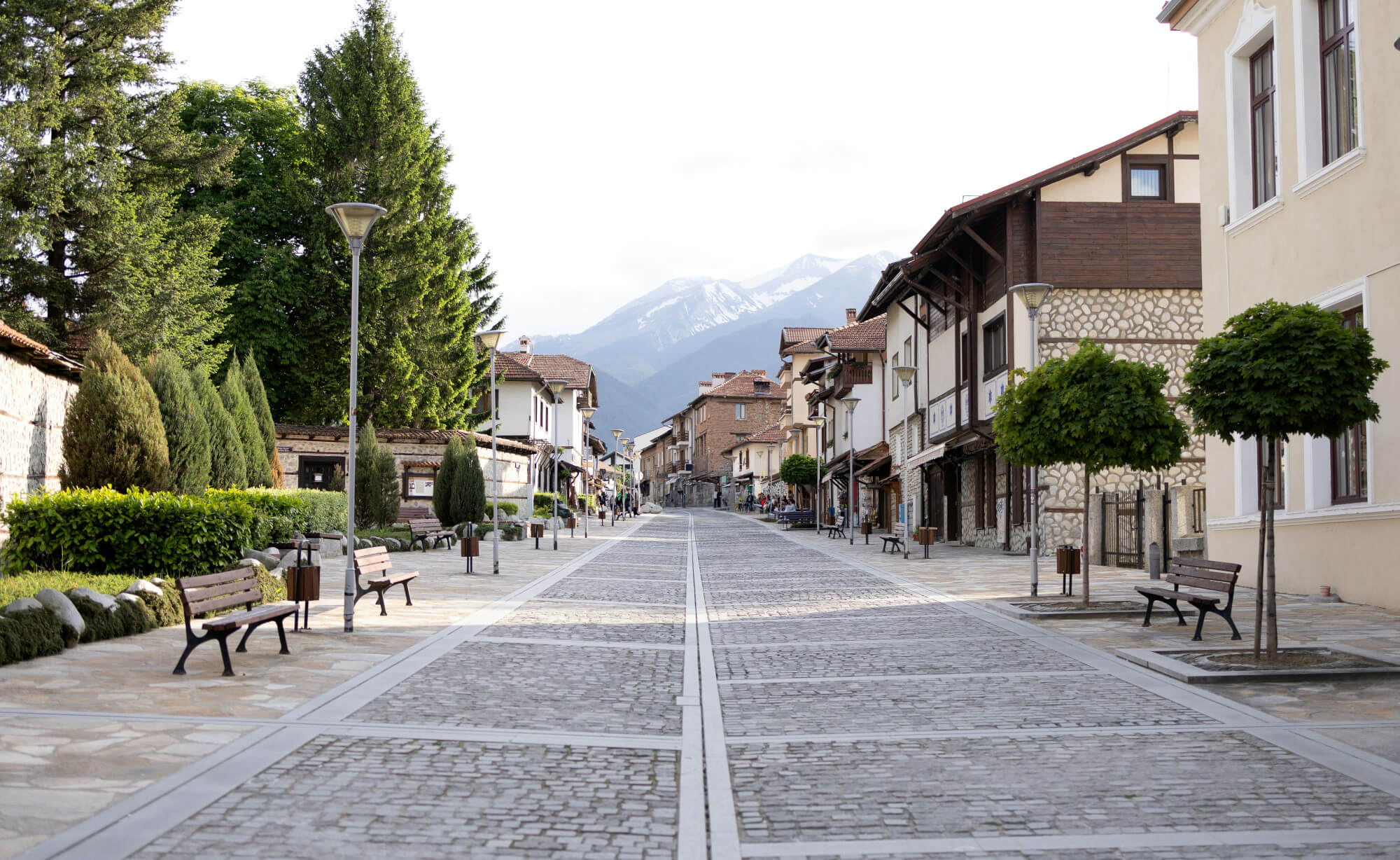
The town splits into two halves that feel quite different. The old town, a grid of cobbled lanes and stone houses around the Holy Trinity church, is where you’ll find the mehanas (traditional taverns) serving slow-cooked kapama and grilled meats by an open fire.
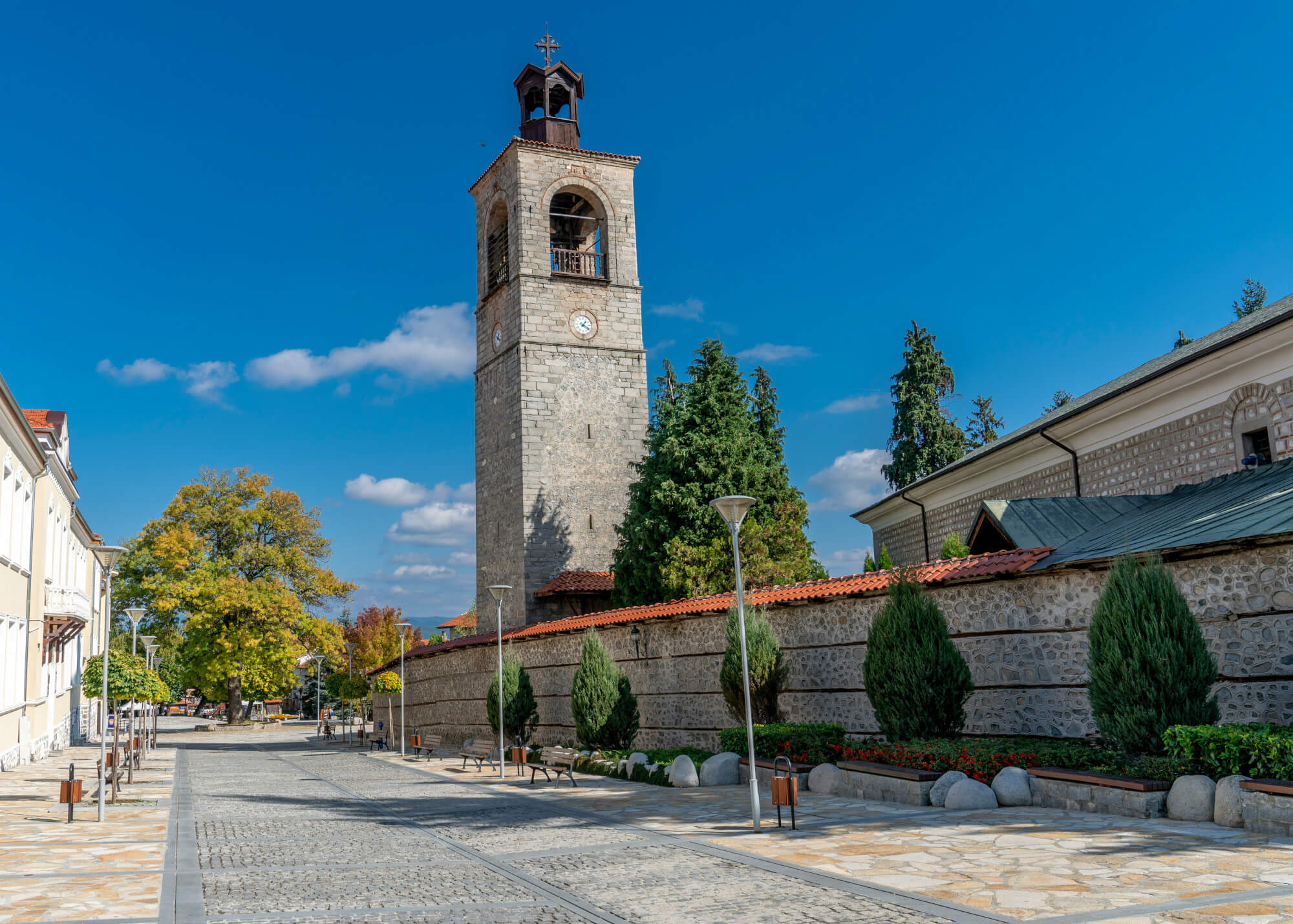
The newer part, spreading uphill towards the gondola station, is full of apartment hotels and ski shops. Most visitors stay somewhere between the two, within a 10-minute walk of the lift.
I’d suggest arriving a day before your first ski day, if you can. It gives you time to pick up hire gear and sort a lift pass without the Saturday-morning queue.
A note on timing
Bansko’s main ski season runs from mid-December to early April, with the busiest weeks around Christmas, New Year and the UK February half-term. If you’re landing on a peak Saturday, give yourself a little extra time on the road: traffic through Simitli and Razlog can slow to a crawl, and a two-hour drive can stretch closer to three.