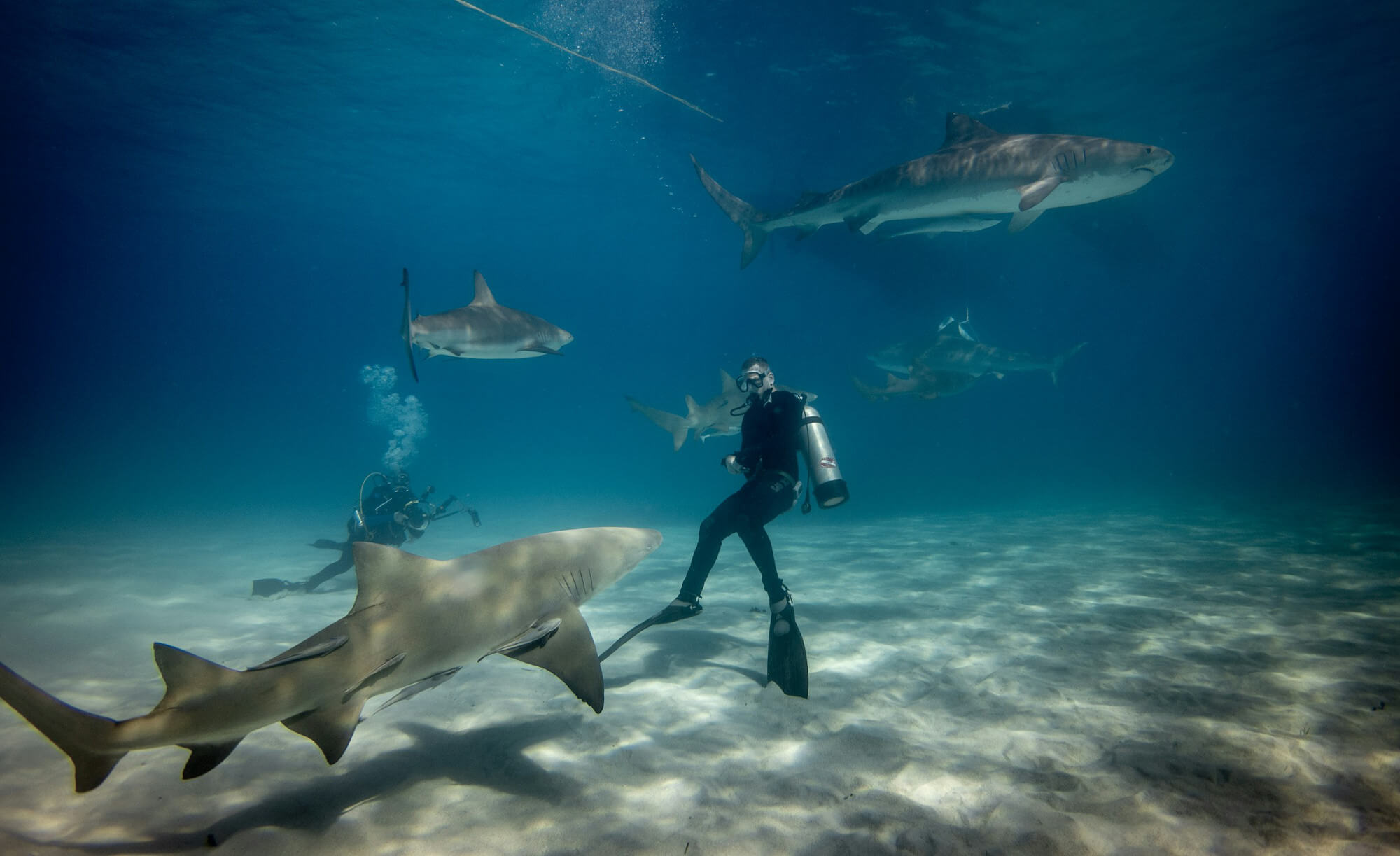
Do you dream in shades of deep blue, with the ghostly silhouette of a hammerhead school gliding overhead? If so, the Revillagigedo Archipelago, often called the “Galapagos of Mexico,” should be your sole focus.
| Sponsored post |
It’s here, hundreds of miles off the Baja coast, that you find the best liveaboard Mexico experience for massive pelagic action. These remote volcanic islands are accessible only by specialised liveaboards Mexico.
Successful encounters with schooling hammerhead, silvertip, and silky sharks are critically dependent on understanding two key variables: the seasonal timetable and the unique underwater topography.
This is not a casual holiday. It’s an advanced, blue-water expedition that rewards strategic planning with truly life-altering wildlife sightings.
The seasonal blueprint: When to go sharking
The diving season runs reliably from November to May/June, but thinking of it as one continuous stretch is a mistake. It’s more like an ocean calendar, with different creatures punching in and out at different times.
Water temperature is the primary determinant of where the food chain, and therefore the shark, will be. By contrasting the warmer early season with the cooler mid-season, we can determine the exact month that offers the best odds for the specific shark you are chasing.
You need to be methodical in your booking, maximising the chance of seeing the phenomenon you came for, because an investment in a liveaboard in Mexico trip is too substantial to leave to chance.
Early season payoff (November-January)
The captains of Mexico liveaboards often cite this as the prime window for actual schooling behaviour. Running from November through January, the slightly cooler temperatures and specific current patterns facilitate the largest, most spectacular aggregations of scalloped hammerheads. We are talking about schools so large they temporarily blot out the sun.
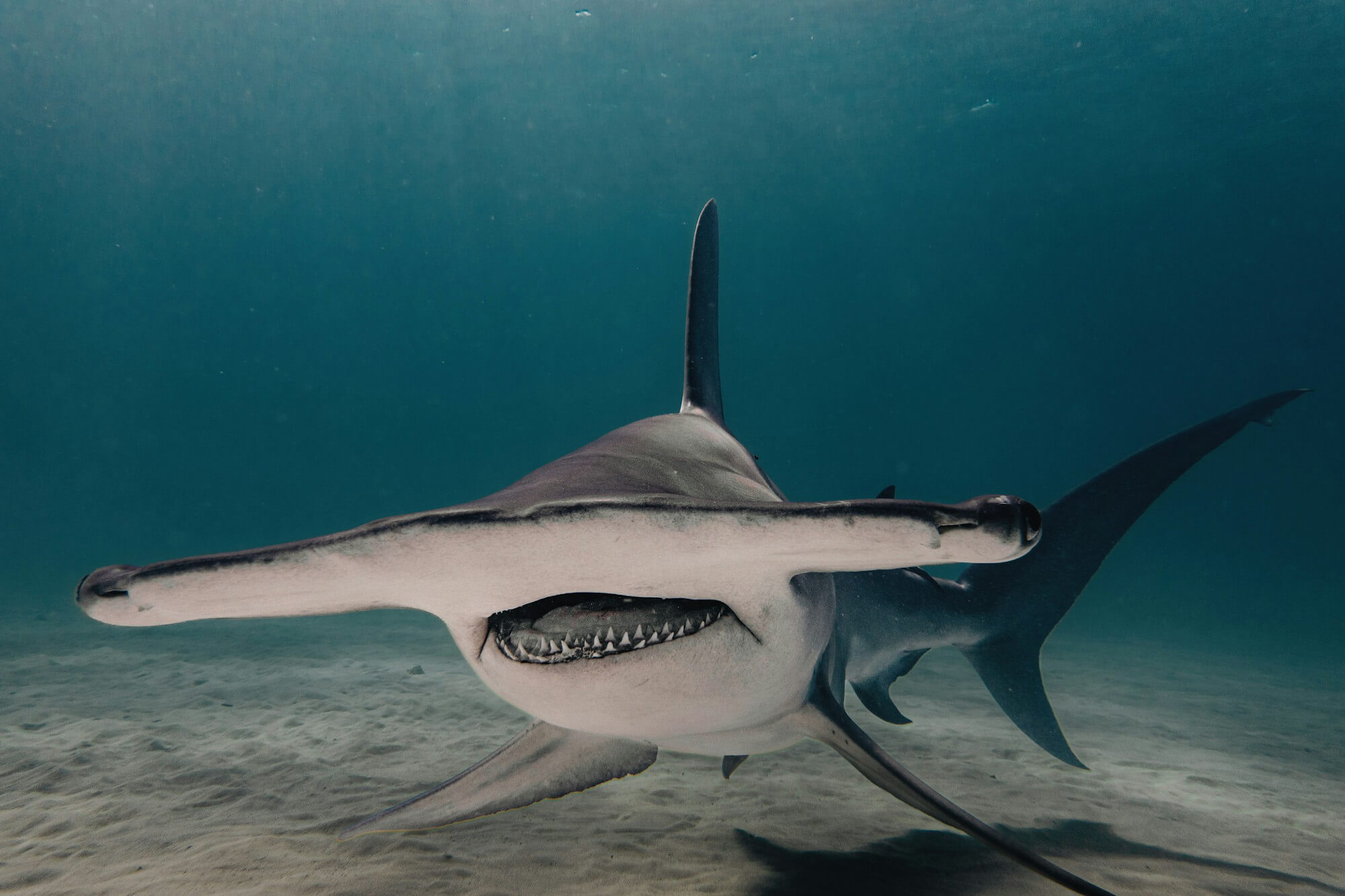
The first few weeks of the season also offer the warmest water temperatures and have the highest likelihood of encountering massive, gentle whale sharks feeding on seasonal plankton blooms. This early seasonal blend of crystal-clear water and giant sharks is why this window often sells out first.
Late season surge (April-May)
If you miss the early hammerhead bonanza, don’t despair. The late season, specifically April and May, offers a powerful secondary surge.
As the water temperature begins its final rise towards the end of the season, it triggers significant offshore biological events, attracting massive bait balls of fish. This influx, in turn, draws in immense numbers of predators.
This is the prime time for the biggest schools of silky sharks who are sleek, fast, and curious, as well as tuna and various other apex predators seeking a seasonal feast. The intense hunting and feeding behaviours witnessed during this period make for exhilarating liveaboard diving in Mexico.
The geographic magnet: topography and thermoclines
Why do these particular remote islands become global hot spots? The answer lies in their geology.
The Revillagigedo Archipelago consists of visible peaks of massive, isolated underwater shield volcanoes that rise thousands of metres above the seabed. This unique, sheer topography acts like a gigantic underwater fence.
As strong deep-ocean currents hit these isolated rock structures, they are forced upwards, creating nutrient-rich upwellings and complex current dynamics. These formations act as giant underwater magnets, drawing the entire food chain, from plankton to hammerhead, into predictable, concentrated areas for divers to observe.
The Canyon at San Benedicto: hammerhead central
There is no more iconic site for this phenomenon than The Canyon (El Cañón) at San Benedicto Island. The topography here, a deep, complex seamount featuring a steep canyon wall, is the ideal shark trap.
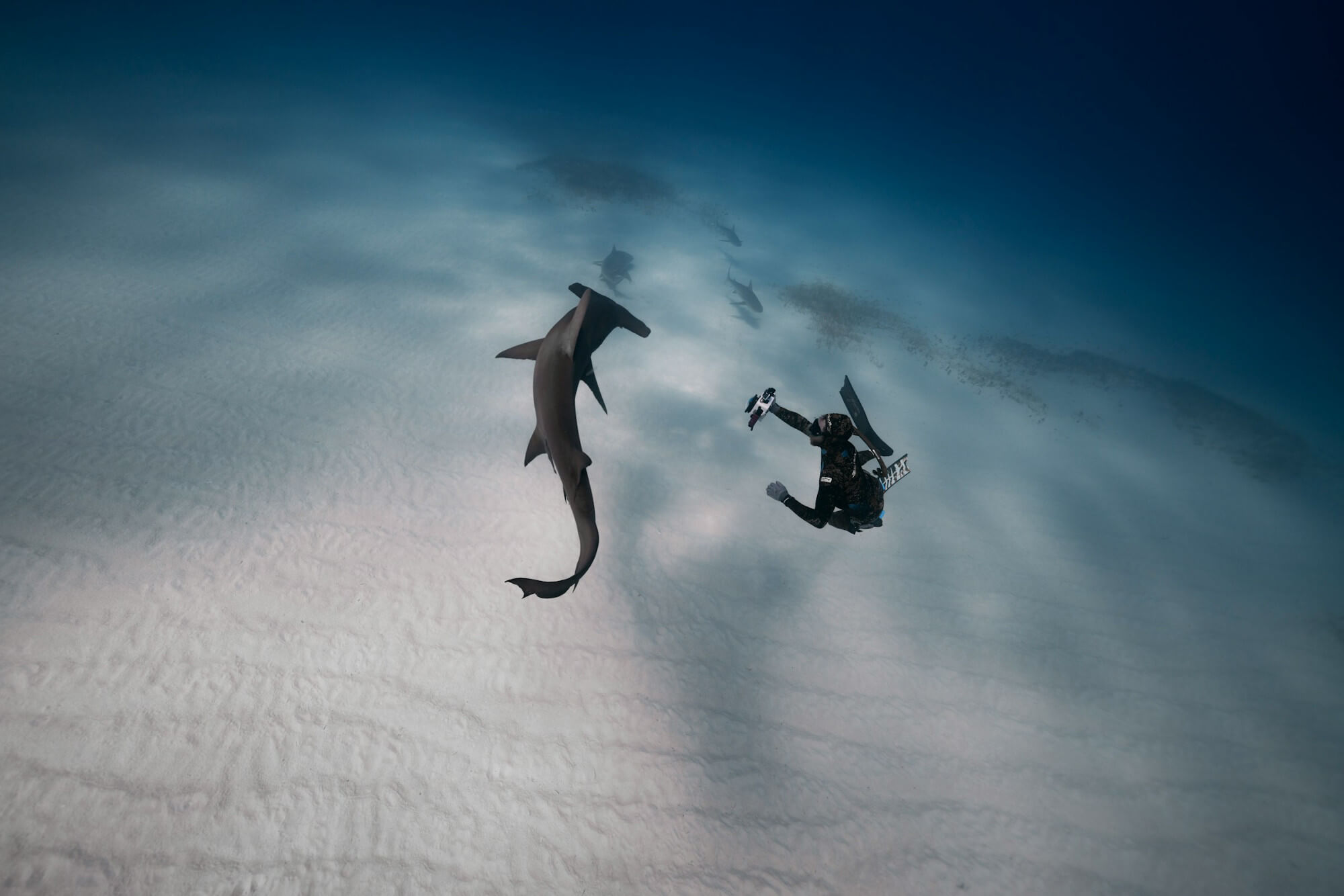
The scalloped hammerheads use this specific location for aggregation and cleaning. Successful diving here involves descending to a designated spot and seeking shelter in the terrain while waiting for the deep schools to rise from the blue. It’s a powerful testament to nature’s scheduling.
- Cleaning stations: Tiny endemic cleaner fish serve the massive pelagics, providing a reason for the sharks to remain stationary in the current, allowing for prolonged viewing.
- Thermocline shelters: The deep canyon topography allows hammerheads to easily descend into cooler water layers, providing a refuge and a thermal barrier during the day.
- Current dividers: The ridge interrupts the strong Pacific currents, creating sheltered eddies that the sharks use for resting and socialising without expending much energy.
Roca Partida and the oceanic pinnacle effect
If The Canyon is a trap, Roca Partida is a lighthouse. This solitary, exposed pinnacle in the middle of the ocean is indispensable for migrating pelagics.
The sheer topography provides the only rest stop for miles, creating a localised ecosystem unlike any other. The powerful currents hitting this sheer rock face create a perpetual whirlpool of life, attracting multiple shark species simultaneously, including stacked whitetip reef sharks, Galapagos sharks, and silvertip sharks.
The captains of liveaboard marinas in Mexico refer to this site as the most reliable place to witness the immense power of isolated topography concentrating marine life.
Targeting silky and silvertip sharks
While the hammerhead schools steal the headlines, the supporting cast here is phenomenal. Both the silvertip and silky sharks are common sightings across the Socorro sites and are fascinating in their own right.
The silvertip is a deep-water pelagic, often seen patrolling the deeper cleaning stations with an air of territorial confidence. The silky shark, however, is famous for its curiosity, frequently appearing in the mid-water column or right off the stern of the liveaboard boats in Mexico.
Understanding these behavioural differences informs where the dive guides position you.
Silky shark strategy: the baitball connection
To guarantee the most intense silky shark action, you must align your liveaboard dive trips in Mexico with the late-season surge. As mentioned, the largest aggregations often coincide with massive baitball events (typically April-May).
The silkies are drawn to this feeding frenzy in huge numbers, providing divers with an opportunity to witness truly wild, active hunting and feeding behaviours. It’s an exhilarating sight, watching these sleek predators swarm the water column, a raw, unforgettable spectacle dependent entirely on the season’s ocean productivity.
Liveaboard logistics and diver skill
It’s critical to remember that this Mexico scuba liveaboard destination is not easy to reach. Its remote nature means long trips (typically 8-10 nights), including a significant open-ocean crossing (24-30 hours).
Therefore, this is strictly for experienced divers. You absolutely need an Advanced Open Water (AOW) certification, extensive comfort with strong currents, deep diving (30m+), and mandatory negative entries.
The vessels must be large and stable enough to handle the Pacific swells. You must bring high-quality gear, including safety essentials like a Surface Marker Buoy (SMB) and an audible signalling device. Planning here is paramount to safety and success.
Maximising a liveaboards Mexico experience in Socorro requires more than simple luck. It demands strategic planning rooted in biological and geographical understanding.
By targeting the prime seasonal windows (November-January for schooling hammerheads) and understanding how the deep, volcanic topography creates these perfect pelagic havens, you exponentially increase your odds.
The islands offer an unparalleled opportunity to witness massive shark aggregations in their natural habitat. Choose your timing, respect the power of the currents, and prepare for the ultimate big animal dive.